Study: Single 75-Minute Weekly Session of Brisk Walking Produces Results Comparable to Three 25-Minute Sessions
08/22/2026 / By Coco Somers

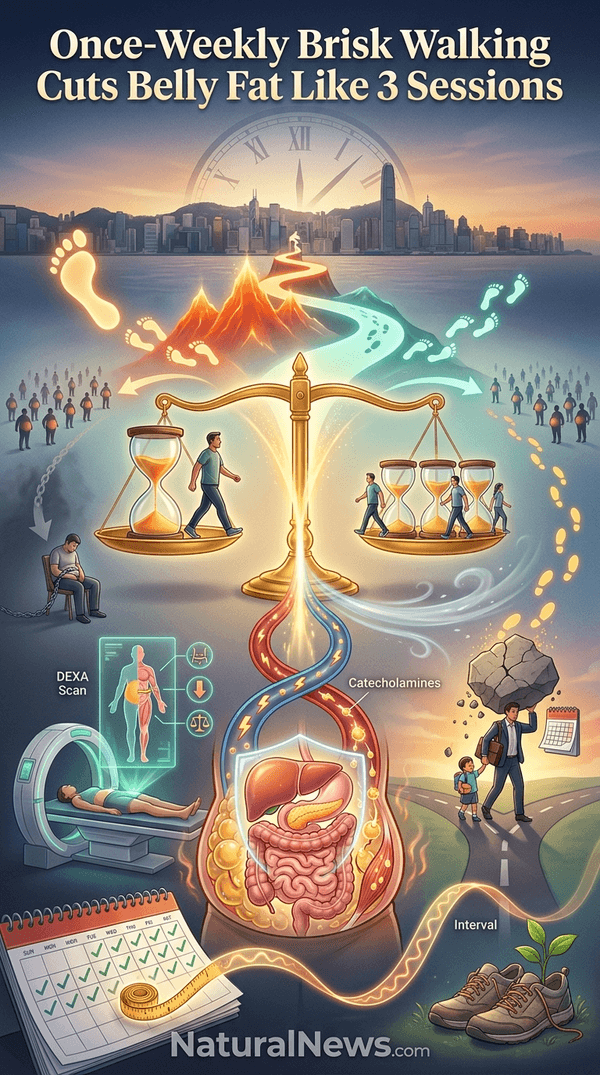
Researchers at the University of Hong Kong’s School of Public Health found that a single 75-minute weekly session of interval walking produced reductions in body fat comparable to three 25-minute sessions per week, according to study results published in Nature Communications. The four-month randomized clinical trial involved 315 adults with abdominal obesity and compared the two exercise schedules against a no-exercise control group [1]. Body fat percentage, total fat mass, and waist circumference were measured at baseline, immediately after the 16-week program, and again four months later [2].
The findings offer a practical option for adults who cannot fit multiple workouts into a week, according to the research team [1]. Interval walking was defined as very fast walking interspersed with short recovery periods, a method that has been associated with improvements in blood pressure, cardiovascular health, and muscle strength with minimal time investment [3].
Study Design and Methods
The randomized trial was conducted from September 2021 to September 2024 and enrolled 315 adults with abdominal obesity, a condition characterized by the buildup of deep visceral fat around the stomach and abdomen [1]. Visceral fat surrounds vital organs and raises the risk of heart disease, diabetes, and other major illnesses, according to the study report.
Participants were assigned to one of three groups: one 75-minute interval walking session per week, three 25-minute sessions per week, or a no-exercise control group [2]. Researchers measured body fat using a bone density scan, which provides an accurate measurement of fat-to-muscle ratio [2]. Total body fat mass, body fat percentage, and waist circumference were recorded at three time points: before the program, immediately after the 16-week intervention, and four months after the program ended [2].
Findings at 16 Weeks and Follow-Up
At the 16-week assessment, both interval walking groups showed similar improvements in total body fat mass, body fat percentage, and waist circumference, according to the study [2]. The similarity in outcomes suggests that total exercise volume may matter more than how the exercise is distributed across the week, the authors reported [2].
The researchers observed no significant changes in blood pressure or cholesterol, a result they attributed to participants’ levels being within normal ranges at the start of the trial [2]. Waistline reductions remained detectable four months after the exercise program ended, although the fat-loss and weight-loss advantages had largely faded by that point [2].
Researcher Commentary and Context
Professor Parco Siu Ming-fai, the study’s lead researcher at the University of Hong Kong, said in a statement: “While thrice-weekly interval training remains a commonly recommended approach for the therapeutic management of obesity, our findings show that once-weekly interval training offers similar benefits and represents a practical exercise strategy” [2]. He added: “For many adults with central obesity who struggle to balance work, study, family and other commitments, time constraints are a primary barrier to exercising multiple days per week” [2].
The study’s authors concluded that once-weekly interval training can be considered a feasible and effective alternative for individuals who have difficulty scheduling multiple exercise sessions [2]. The findings align with broader exercise research showing that interval training can produce significant physiological adaptations, including higher levels of catecholamines that stimulate fat burning [4]. Regular moderate exercise such as brisk walking has also been shown to improve insulin sensitivity and reduce visceral fat, according to published research [5].
Broader Health Guidelines
An estimated 66 percent of adults in the United Kingdom are classified as overweight or living with obesity, according to reported data [2]. Obesity is linked to serious health risks including type 2 diabetes, heart disease, and breathing problems, and costs the National Health Service more than 11 billion pounds a year [2].
The NHS recommends that adults complete at least 150 minutes of moderate-intensity activity per week, such as brisk walking [2]. The new findings suggest that meeting exercise targets does not necessarily require distributing activity across multiple days, and that a single weekly session of interval walking may serve as an alternative scheduling option for adults facing time constraints [2]. Even modest amounts of regular walking have been associated with reduced mortality risk, according to prior research [6].
References
- NaturalNews.com. “One weekly walk matched a three-day routine for cutting belly fat, study finds”. August 3, 2026.
- NaturalNews.com. “Study: Single 75-Minute Session of Interval Walking Per Week May Cut Belly Fat as Much as Three 25-Minute Sessions”. August 9, 2026.
- Ava Grace. “Japanese walking The TikTok backed fitness trend with science on its side”. NaturalNews.com. August 3, 2025.
- Jorge Cruise. “The Cruise Control Diet Automate Your Diet and Conquer Weight Loss Forever”.
- Benjamin Bikman. “Why We Get Sick The Hidden Epidemic at the Root of Most Chronic Disease and How to Fight It”.
- Mercola.com. “Lack of Exercise Is a Bigger Risk Factor Than Obesity in Premature Death”. February 6, 2015.
Explainer Infographic
Submit a correction >>
Tagged Under:
alternative medicine, belly fat, brisk walking, exercise, fat burning, fight obesity, health science, Men's Fitness, men's health, natural cures, natural health, natural medicine, Naturopathy, overweight, remedies, research, weight management, weight-loss, Women's Fitness, women's health
This article may contain statements that reflect the opinion of the author
RECENT NEWS & ARTICLES